Capturing the Uncapturable: Can Technology Ever Truly Bottle the Magic of a Live Classical Performance?
There is a moment in every great classical performance that no recording has ever adequately preserved. It arrives differently each time — in the held breath before a pianist's hands descend, in the invisible current that passes between a conductor and an orchestra in the final bars of a symphony, in the particular quality of silence that a concert hall generates when three thousand people forget, simultaneously, to move. Those who have experienced it describe it in terms that resist precision: a feeling of presence, of transmission, of something shared that cannot be reduced to sound waves alone.
For as long as recording technology has existed, engineers and artists have been attempting to capture that feeling. For as long as they have been attempting it, they have been failing — not entirely, but in the ways that matter most. Now, a new wave of technological innovation is renewing the effort with tools that would have seemed fantastical a decade ago. Whether the outcome will be different this time is a question that touches the deepest assumptions of classical music's relationship with its own liveness.
What Is Actually Lost
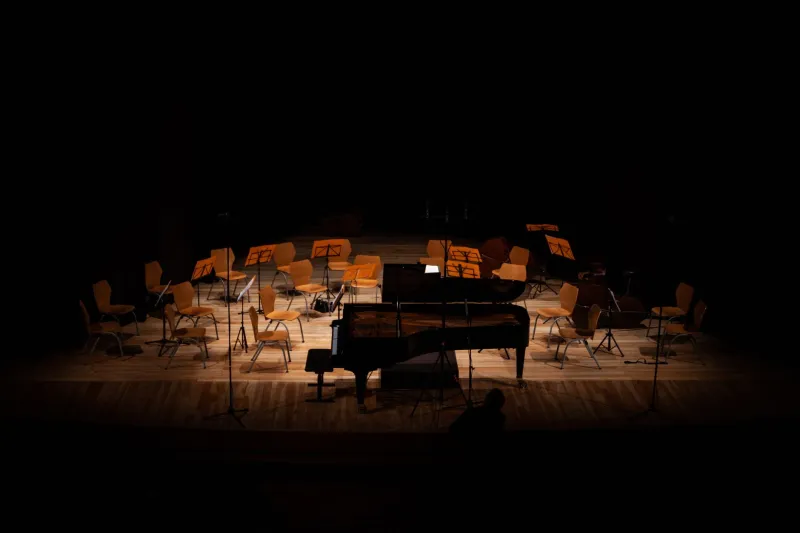
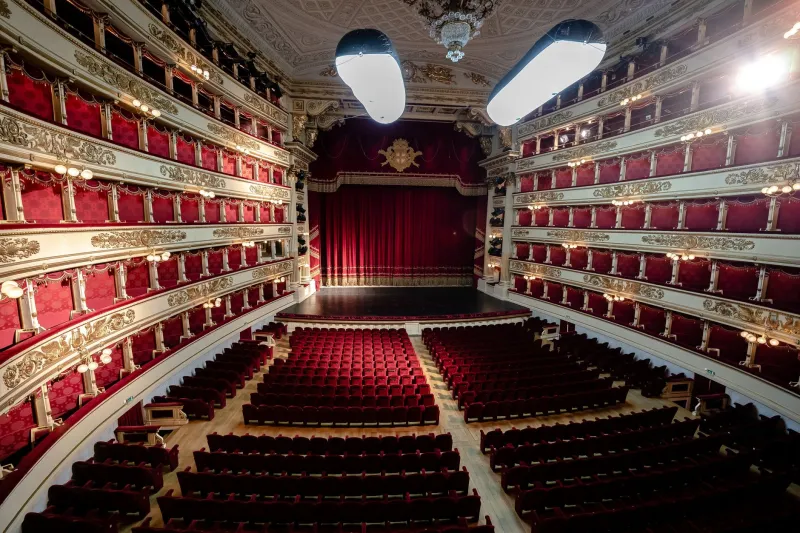
To appreciate what technology is attempting to recover, it helps to be specific about what conventional recording removes. The most obvious loss is spatial. A concert hall is not merely a container for sound; it is an active participant in the musical experience. The way sound travels from the stage to the rear of a hall, the way it reflects off side walls and accumulates beneath a high ceiling, the way different seats offer different acoustic perspectives on the same performance — all of this is collapsed in a standard stereo recording into a single, fixed listening position that no actual audience member ever occupies.
Beyond acoustics, there is the visual dimension, which is more significant than audio-centric discussions of classical music typically acknowledge. Watching a performer's physical engagement with their instrument — the bow arm of a violinist, the foot pedaling of a pianist, the breathing of a singer — provides information that shapes the listening experience in ways that listeners may not consciously register but nonetheless respond to. A recording that separates sound from image removes a layer of meaning that the live experience delivers as a matter of course.
And then there is the most elusive loss of all: the sense of shared presence, of being in a room with other human beings who are collectively attending to something. This is not merely sentimental. Research in music cognition suggests that communal listening genuinely alters the way individuals process musical experience — that we hear differently, more deeply, when we hear together. A recording heard through headphones, however technically perfect, is a fundamentally different perceptual event from a symphony heard in a room full of people who are as moved as you are.
The New Technological Frontier
The tools now being brought to bear on these problems are genuinely impressive in their ambition. Immersive audio formats — Dolby Atmos, Sony 360 Reality Audio, and their competitors — attempt to restore the spatial dimension of live listening by placing sound sources in three-dimensional space around the listener. When executed well, these formats can produce a listening experience that is startlingly different from conventional stereo, one in which the orchestra seems to occupy actual space rather than emanating from two points in front of the listener.
Several of America's major orchestras have begun experimenting with immersive audio recording. The Los Angeles Philharmonic, long a leader in technological adventurousness, has explored spatial audio presentations in conjunction with its programming at the Walt Disney Concert Hall — a building whose acoustic design is itself a form of spatial artistry. The results have generated genuine excitement among audio professionals, if more measured responses from some classical listeners who find the effect, in certain implementations, more impressive than moving.
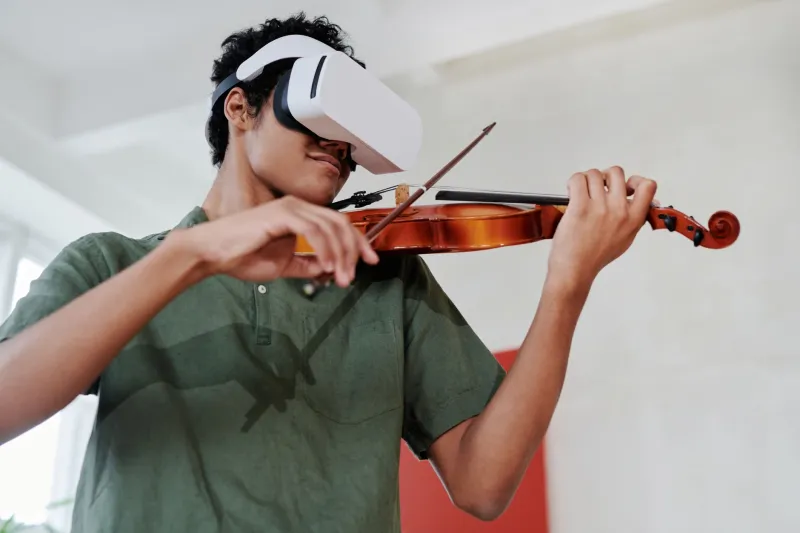
Virtual reality represents a more radical intervention. VR recordings of classical performances place the viewer inside the performance itself — on stage with the orchestra, in the conductor's position, or in any number of audience perspectives. The technology is still maturing, and current implementations vary significantly in quality, but the best examples offer something that no previous recording format has achieved: a genuine sense of physical presence in the performance space.
The Artist's Perspective
How classical musicians themselves relate to these technologies is a question with no single answer. Some have embraced the new tools with genuine enthusiasm, recognizing in them an opportunity to reach audiences who will never attend a live performance — whether for reasons of geography, economics, disability, or simple unfamiliarity with classical music's conventions. For these artists, the perfect is the enemy of the good: an imperfect technological approximation of the live experience is vastly preferable to no experience at all.
Others are more guarded. There is a concern, not unreasonable, that highly polished technological reproductions of live performance may actually diminish the perceived value of the real thing — that if a sufficiently convincing simulacrum is available on demand, the effort and expense of attending a live concert may seem less worthwhile. This is not a new anxiety; it has attended every previous advance in recording technology, from the phonograph onward. But the sophistication of current immersive technologies gives it new urgency.
There is also a more philosophical objection: that the ineffable qualities of live performance are ineffable precisely because they are not properties of the sound, but of the situation. They belong to the event, not the artifact. To attempt to capture them is, on this view, a category error — like trying to preserve the feeling of a conversation by transcribing its words.
Democratization and Its Complications
Perhaps the most compelling argument for technological investment in classical music transmission is the one rooted in access. The finest classical performances in America are, by and large, available only to those who can afford tickets, who live within reasonable distance of major cultural centers, and who possess the cultural fluency to navigate institutions that can still feel exclusionary to newcomers. This is a genuine problem for an art form that aspires to universality.
Immersive recordings and high-quality streaming cannot fully solve this problem, but they can meaningfully address it. A teenager in rural Mississippi who discovers a passion for orchestral music through a VR recording of a Chicago Symphony performance is not having the same experience as someone in Orchestra Hall — but they are having a real experience, one that may lead, in time, to the real thing.
The question is whether the technology can be developed and deployed with sufficient care for the art itself — whether the engineers and developers leading this work understand what they are trying to preserve well enough to preserve it. The answer, at this still-early stage, is: sometimes. The best immersive classical recordings available today are remarkable achievements. They are also, unmistakably, recordings. The curtain, for now, still rises only in the hall.
A Productive Tension
Perhaps the most honest conclusion is that the tension between live performance and its technological reproduction is not a problem to be solved but a condition to be navigated. Technology will continue to improve; the gap between the recorded and the live will continue to narrow. But something will always remain on the far side of that gap — some quality of human presence, of shared risk, of irreproducible moment — that belongs exclusively to the concert hall.
At Scarlet Valse, we believe that tension is itself generative. The effort to capture what cannot be captured has already produced remarkable innovations in how classical music is recorded, transmitted, and experienced by new audiences. And every failed attempt to fully replicate the live experience is, in its own way, a testament to what makes that experience worth protecting.