Hearing the Unheard: How Classical Musicians Are Mastering the Art of Deep Listening
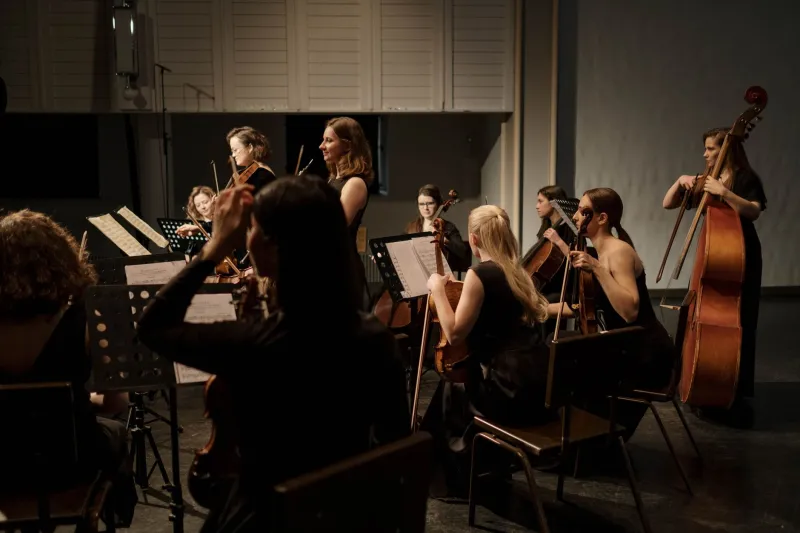
In the cavernous stillness of a Chicago rehearsal hall, before a single bow has been drawn across a string, a chamber ensemble sits in complete silence. Eyes closed, breathing measured, they are not resting — they are working. This deliberate pause, held for a full two minutes before the first rehearsal downbeat, has become a cornerstone of their collective practice. It is, their cellist explains, the most important part of the session.
This scene, once unusual, is becoming increasingly familiar across the American classical music landscape. A growing cohort of performers — from solo pianists to full orchestral sections — are integrating deep listening practices and mindfulness-based principles into their artistic preparation. The shift is subtle but seismic, touching everything from how musicians interpret centuries-old scores to how they connect with audiences in the final, irreplaceable moment of live performance.
The Noise Within
For much of classical music's institutional history, the rehearsal room has been a place of relentless doing. Scales, repetition, sectional drilling, metronome discipline — the vocabulary of classical training has long privileged output over reception. Yet a number of performers and pedagogues are now questioning whether this relentless forward motion inadvertently crowds out something essential.
"We train our fingers for years," says one Boston-based pianist who has incorporated contemplative listening practices into her daily routine. "But very few of us are trained to actually hear — to sit with sound, to let it arrive rather than chase it." She draws a direct parallel to the practice of active listening in therapeutic settings, where a counselor's primary skill is not to speak but to receive, to hold space, to notice nuance without immediately reacting.
The comparison is more than metaphorical. Researchers in music psychology and neuroscience have begun documenting measurable changes in how musicians process auditory information when they engage in structured listening exercises. Studies conducted at several American university music programs suggest that performers who practice intentional silence — periods of focused, non-analytical listening — demonstrate increased sensitivity to tonal color, improved ensemble cohesion, and a heightened capacity to respond in real time to the emotional texture of a performance.
The Therapeutic Parallel
The crossover between psychological listening frameworks and musical practice has found perhaps its most articulate expression in the work being done at a handful of progressive conservatories. At institutions in New York and Los Angeles, faculty members with backgrounds in both performance and clinical psychology are developing curricula that treat listening as a discrete, trainable skill — one as rigorous and worthy of cultivation as intonation or sight-reading.
Central to this approach is the concept of non-judgmental presence, borrowed directly from mindfulness-based cognitive therapy. In practice, this means training musicians to receive sound — whether their own or their ensemble's — without the immediate evaluative instinct that classical training typically reinforces. The inner critic, so often a necessary tool, is temporarily suspended. What remains is pure perception.
"There is a kind of violence in how we habitually listen to ourselves," observes one faculty member who teaches a graduate seminar on performance awareness. "We hear a phrase and instantly catalog what was wrong. That reflex has its place, but it can also prevent you from experiencing what you actually just played — from letting the music teach you something you didn't plan."
This reframing has practical consequences. Musicians who practice receptive listening report discovering expressive possibilities in familiar works that years of analytical study had obscured. A Brahms intermezzo, heard without the overlay of ingrained interpretive assumptions, can reveal rhythmic ambiguities and harmonic tensions that feel entirely new — even to a performer who has played the piece hundreds of times.
Silence as Compositional Element
The renewed attention to listening has also sharpened performers' engagement with one of music's most underappreciated elements: silence itself. In the Western classical tradition, rests and fermatas are often treated as punctuation — brief interruptions in the flow of sound. But musicians steeped in deep listening practices are beginning to treat these moments with the same interpretive weight they accord to the most demanding passages of a score.
This perspective finds support in the writings of numerous twentieth-century composers who were themselves deeply influenced by contemplative traditions. The silence in a late Beethoven quartet movement, the suspended breath before a Schubert recapitulation — these are not voids but presences, charged with everything the music has established and everything it is about to become.
For audiences, the effect of this heightened attention to silence can be startling. Several concertgoers who attended a recent recital series in San Francisco noted an unusual quality of stillness in the hall — a collective held breath that seemed to be led, paradoxically, by the performer rather than simply shared among the listeners. This is not accidental. Musicians who have internalized deep listening practices often describe a perceptible shift in the audience's attention when they themselves become genuinely receptive rather than merely expressive.
The Ensemble Dimension
The implications extend beyond solo performance into the complex social ecosystem of chamber and orchestral playing. Ensemble music demands a particular quality of interpersonal listening — a constant, fluid awareness of one's colleagues that goes far beyond technical coordination. Musicians who have developed their receptive capacities individually often report transformative changes in how they function within a group.
"When you genuinely listen to your stand partner — not to evaluate, not to adjust, but simply to hear — the music changes," says one violist with a major American symphony. "There is a responsiveness that becomes possible when you stop anticipating and start actually receiving." He describes this quality as something audiences can sense even when they cannot articulate it — a kind of aliveness in the ensemble sound that distinguishes a truly communicative performance from a merely accurate one.
Orchestral conductors, too, are taking notice. A number of American music directors have begun incorporating structured listening exercises into orchestra rehearsals — brief periods at the start of a session where musicians are asked simply to listen to the hall, to one another, to the silence before the first downbeat. The practice takes no more than a few minutes but, by multiple accounts, reshapes the quality of attention that follows.
A New Standard of Artistry
What this emerging practice ultimately suggests is an expanded definition of musical excellence — one that encompasses not only what a performer produces but what they are capable of receiving. In a cultural moment when speed, output, and measurable achievement dominate even the arts, the deliberate cultivation of receptivity represents a quiet but meaningful counterstatement.
The curtain, in this sense, rises not only on brilliance of execution but on the far rarer brilliance of genuine presence — the willingness to be changed by what one hears, in real time, before an audience that is itself listening. For the classical musicians embracing this discipline, the silence between the notes is not empty. It is, in many ways, where the music lives.