Rising from the Ranks: How Classical Music's Supporting Players Are Crafting Legacies All Their Own
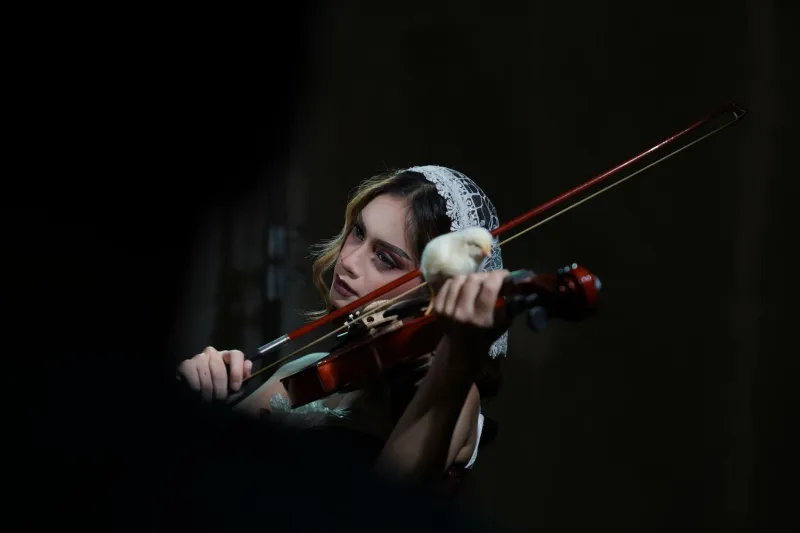
There is a particular kind of discipline required to sit in the second violin section of a major American symphony orchestra — to play with full commitment, night after night, while someone else takes the bow. For decades, that discipline was rewarded with steady employment and the quiet dignity of ensemble membership. What it rarely produced was a name the audience would recognize by morning.
That calculus is changing.
Across the United States, a generation of orchestral musicians and opera understudies is rewriting the terms of classical music's unspoken social contract. Rather than measuring their careers solely by proximity to the principal chair, these artists are constructing parallel artistic identities — ones that are, in many cases, attracting audiences that the institutions they serve have never been able to reach.
The Architecture of the Old Hierarchy
To understand the shift, one must first appreciate how rigidly classical music's internal hierarchy has historically been enforced. In most major American orchestras, the principal players — the first-chair violinist, the lead oboist, the principal cellist — occupy positions of enormous symbolic weight. They negotiate separately, earn more, and carry the visible burden of artistic leadership. Everyone else, however gifted, exists in deliberate service to the collective sound.
Opera companies operate under a similar logic. The cover artist — the performer prepared to step in should the headline soprano lose her voice — is a fixture of every major production, yet one whose work is, by design, invisible unless catastrophe strikes. The Metropolitan Opera, the Lyric Opera of Chicago, the San Francisco Opera: all maintain rosters of cover artists who rehearse exhaustively for performances they may never give.
For much of the twentieth century, this arrangement was accepted as the natural order. The hierarchy felt permanent because the institutions that sustained it were permanent.
Social Media and the Democratization of Visibility
The first crack in that permanence came not from within the concert hall but from a smartphone screen.
Platforms like Instagram, YouTube, and TikTok have proven to be remarkably indifferent to institutional rank. A second-chair clarinetist who posts a luminous solo recording from her apartment in Philadelphia can accumulate followers — and, crucially, admirers — without the endorsement of a music director or a publicist. The audience she builds is hers alone.
This dynamic has been transformative. Musicians who once relied entirely on their orchestral affiliation for public recognition are now cultivating independent profiles that exist alongside, and sometimes eclipse, their ensemble identities. Some post performance clips; others offer commentary on repertoire, historical context, or the unglamorous mechanics of professional orchestral life. All of them are, in effect, building brands — a word that would have scandalized an earlier generation of classical purists but which describes something genuinely new and genuinely powerful.
The effect on opera covers has been equally pronounced. Several young cover artists at regional American companies have used social media to document their preparation processes — the late-night coachings, the score markings, the physical demands of maintaining readiness — and in doing so have transformed what was once a story of invisibility into one of compelling, relatable dedication.
Chamber Music as Creative Laboratory
Beyond the digital realm, many of these musicians are finding liberation in the chamber music format. Small ensembles — string quartets, piano trios, wind quintets — offer something the symphony orchestra cannot: full artistic ownership. Every interpretive decision, from tempo to phrasing to programming, belongs to the performers themselves.
Numerous orchestral musicians across the country have formed chamber groups that perform independently of their host institutions, often in unconventional venues. Breweries, art galleries, historic libraries, and intimate black-box theaters have all served as settings for these performances, and the audiences they attract frequently skew younger and less initiated than the traditional symphony crowd.
The programming choices these groups make are telling. Rather than defaulting to the canonical Beethoven and Brahms that anchor most orchestral seasons, many chamber ensembles led by orchestral musicians are programming living American composers, underperformed works by historical figures from outside the European tradition, and original arrangements that blur genre boundaries. The freedom is intoxicating — and the results are often artistically adventurous in ways that large institutional programming rarely permits.
The Side Project as Artistic Statement
Beyond chamber music, a number of orchestral musicians are pursuing side projects that extend even further from the classical mainstream. Collaborations with jazz ensembles, commissions of new works for unusual instrumentation, educational podcast series, and community residency programs have all become vehicles through which supporting players are expressing artistic identities that their orchestral roles cannot fully accommodate.
What is striking about these ventures is that they are rarely conceived as departures from classical music. The musicians involved almost universally describe their side projects as extensions of, rather than escapes from, their primary artistic commitments. The discipline, the ear training, the interpretive sophistication developed through years of orchestral service — all of it pours into these independent endeavors and elevates them.
Institutions are beginning to notice. Several major American orchestras have quietly begun encouraging their musicians to pursue outside projects, recognizing that a musician with a rich independent artistic life brings energy and perspective to the ensemble that benefits the whole. The old anxiety about divided loyalties is giving way to a more pragmatic understanding: artists who feel creatively fulfilled make better colleagues.
A New Kind of Legacy
The question of legacy haunts every serious classical musician, and it haunts the supporting player with particular intensity. The principal violinist's name appears in program notes for decades; the section player's contribution is absorbed into the collective and attributed to no one in particular.
But legacy, it turns out, can be constructed in more than one way. The chamber ensemble that premieres a dozen new American works over a decade leaves a mark on the repertoire. The cover artist whose social media presence introduces ten thousand people to the emotional world of opera leaves a mark on the audience. The orchestral musician whose educational podcast reaches a teenager in rural Kansas and changes the trajectory of that young person's life leaves a mark that no program note could adequately capture.
Classical music has always depended on the commitment of artists who give more than they receive in recognition. What is new is that those artists are no longer willing to let that commitment go unwitnessed. They are documenting it, sharing it, and building from it — and in doing so, they are enriching an art form that needs, now more than ever, every voice it can find.
The curtain, it seems, rises for everyone eventually. Some performers simply decide not to wait.