New Movements: The Choreographers Rewriting the Language of American Ballet
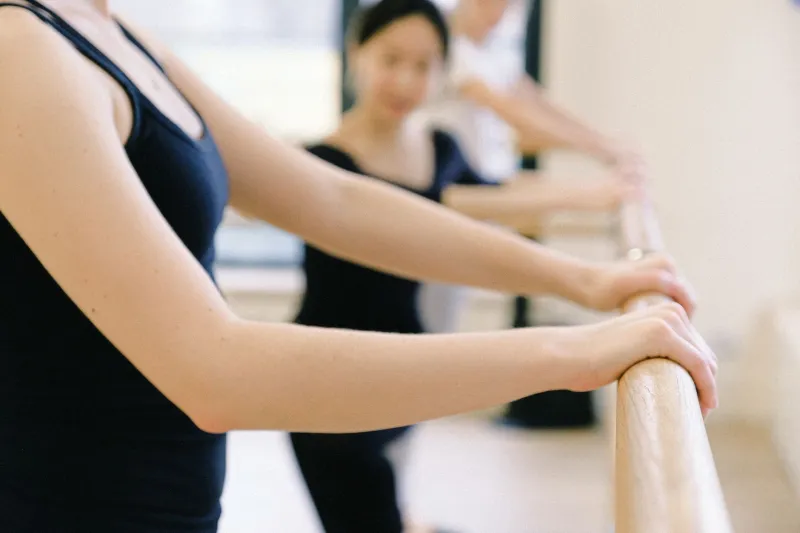
Ballet has always been, at its core, a language — one built from centuries of codified gesture, refined line, and the extraordinary discipline of the trained body. Like any living language, it evolves. New vocabularies emerge; old constructions are revisited with fresh understanding; meanings shift in response to the world outside the studio door. What is happening on American ballet stages today is precisely this kind of evolution — and it is arriving with remarkable force.
A rising generation of choreographers is creating original works for classical companies across the country, bringing with them perspectives shaped by cultural backgrounds, artistic disciplines, and life experiences that the traditional ballet world has not always reflected. Their work is neither a rejection of the classical inheritance nor a passive continuation of it. It is something more interesting: a genuine dialogue between the form and the moment.
Beyond the Nineteenth Century Blueprint
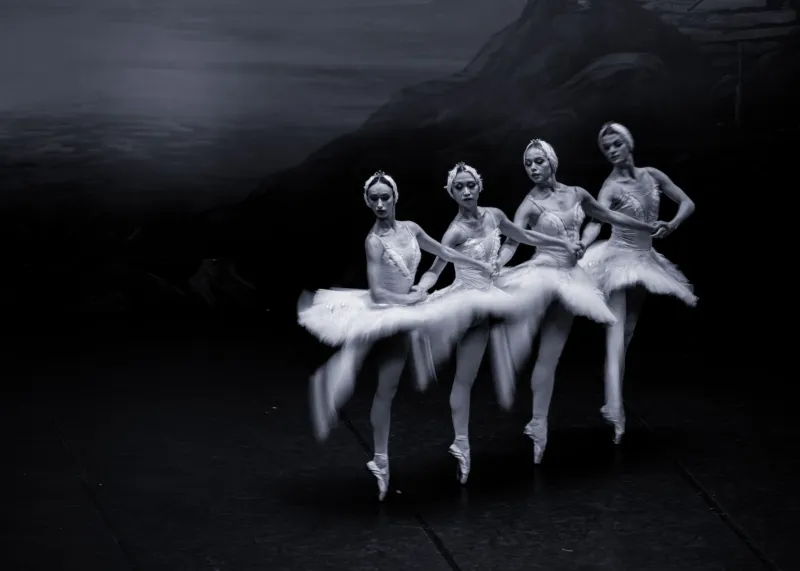
For much of its American history, ballet's choreographic canon has leaned heavily on a relatively narrow set of sources. The great nineteenth-century story ballets — Swan Lake, The Sleeping Beauty, Giselle — have anchored repertoires from New York to San Francisco, and with good reason. They are masterworks of theatrical imagination, and they continue to fill houses.
But the dominance of this inherited repertoire has, at times, created a perception problem. Ballet, in the popular imagination, can appear frozen — a beautifully preserved artifact rather than a living art form. Artistic directors at major American companies are increasingly aware of this tension, and many have responded by actively commissioning new work from choreographers whose visions extend well beyond the nineteenth-century blueprint.
New York City Ballet's commitment to new choreography, a tradition extending back to George Balanchine's founding vision, has been deepened in recent years through initiatives that specifically seek out emerging voices. American Ballet Theatre has similarly expanded its investment in original commissions, with a particular emphasis on choreographers whose cultural backgrounds bring new narrative possibilities to the classical stage.
Voices Reshaping the Form
Among the choreographers drawing the most sustained attention is Claudia Schreier, whose work for NYCB and other companies has been praised for its capacity to locate emotional depth within rigorous classical structure. Her choreography does not announce its contemporary sensibility through obvious stylistic rupture; rather, it finds new meaning within the vocabulary already present in the form — a subtler and, many argue, more lasting kind of innovation.
Justin Peck, resident choreographer at NYCB, has spent the better part of a decade demonstrating that new ballet can speak to contemporary American experience without abandoning technical rigor. His works draw on popular music, vernacular movement, and the visual textures of modern life, yet they remain unmistakably rooted in the classical tradition. The result is a body of work that feels genuinely of this moment while honoring the art form's deepest commitments.
Further afield, choreographers like Darrell Grand Moultrie and Camille A. Brown — whose work spans ballet, modern dance, and musical theater — are bringing African American cultural traditions into dialogue with classical form in ways that are expanding both the aesthetic and the audience for ballet. Brown's theatrical intelligence and Moultrie's rhythmic sophistication have each, in different ways, demonstrated that the ballet stage is capacious enough to hold stories it has not always been asked to tell.
The Artistic Director as Curator and Advocate
Behind every significant choreographic commission is an artistic director willing to take risks. The decision to invest resources — financial, institutional, and reputational — in an unproven work is never a neutral act. It reflects a set of values about what ballet is for and who it is meant to serve.
Virginia Johnson, who led Dance Theatre of Harlem for a decade before stepping down in 2023, was an especially articulate advocate for the idea that classical ballet must actively seek out the full range of American experience if it is to remain relevant. Under her leadership, DTH commissioned works that drew on African American history, contemporary social realities, and non-Western movement traditions — all rendered through the company's distinctive fusion of classical technique and cultural specificity.
Similarly, Tamara Rojo, during her tenure as artistic director of San Francisco Ballet, made the cultivation of new choreography a central institutional priority, commissioning works from international voices while simultaneously building platforms for American emerging choreographers. Her approach reflected a conviction that the art form's future depends not on preservation alone but on active, deliberate renewal.
The Studio as Laboratory
For the choreographers themselves, the process of creating new work for classical companies is frequently described as a kind of laboratory experience — one that demands both technical fluency and genuine creative risk. Working with dancers trained in the classical tradition, they must find ways to introduce new movement ideas without alienating the performers from their own expertise.
"The classical vocabulary is not a limitation," one emerging choreographer explained in a recent panel discussion hosted by a major American dance organization. "It is a starting point. The question is always: where can we go from here that we haven't been before?"
That question, asked with honesty and rigor, is producing some of the most compelling dance theater currently on American stages. Works that blend pointe work with grounded, weight-bearing contemporary movement; narratives drawn from immigrant experience, from Black American history, from the complexities of gender and identity — these are not departures from ballet's tradition of storytelling. They are its continuation, carried into the present with fresh urgency.
A Repertoire for the 21st Century
What is emerging, across companies large and small, is the beginning of a new repertoire — one that may, in time, carry the same canonical weight as the works it sits alongside. The process is neither swift nor guaranteed. Not every commission becomes a lasting work; not every bold experiment succeeds on its own terms. But the willingness to attempt, to commission, to risk failure in pursuit of something genuinely new, is itself a form of artistic vitality.
For audiences, the invitation is to witness this process in real time — to be present at the creation of works that may define the art form for decades to come. At Scarlet Valse, we find in this moment a particular kind of excitement: the curtain rising not on a familiar masterwork, but on something that has never before been seen.