Open House: How American Orchestras Are Tearing Down the Velvet Rope

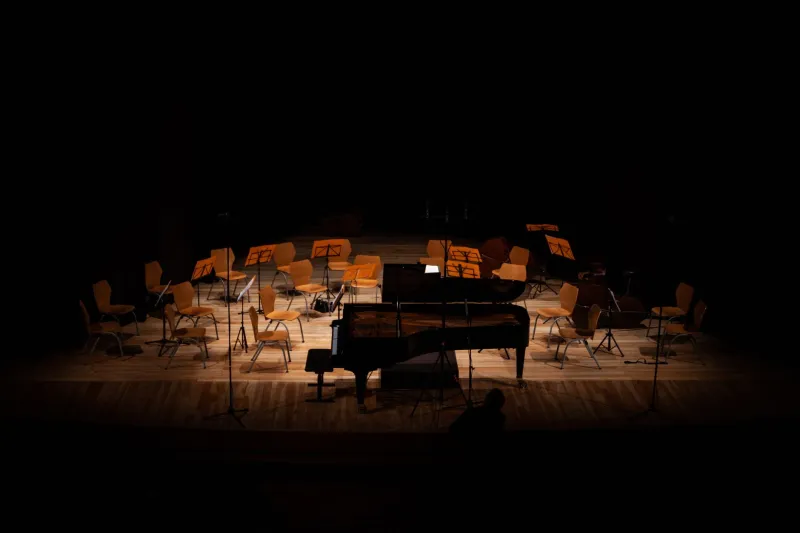
Photo by Photo by Robert Katzki on Unsplash on Unsplash
For generations, the concert hall has functioned as much as a social fortress as a musical sanctuary—its gilded interiors implicitly reserved for those who already knew the dress code, the etiquette, and the price of admission. Now, a growing coalition of mid-sized American orchestras is dismantling that fortress, brick by brick, with strategies that are reshaping who gets to sit beneath the chandelier. The results are both encouraging and, in certain rarefied quarters, deeply controversial.
The Price of Exclusion
The economics of classical performance have long conspired against working-class Americans. A premium orchestra seat in a major metropolitan venue can command upward of $150, a figure that places an evening of live Beethoven firmly out of reach for millions of households. Add to that the unspoken cultural taxes—the expectation of formal attire, an assumed familiarity with program notes, the social anxiety of navigating an unfamiliar ritual—and the barriers multiply well beyond the financial.
A 2022 survey conducted by the League of American Orchestras found that audience demographics at major symphony halls skewed heavily toward households earning above $100,000 annually, with white Americans comprising the overwhelming majority of regular attendees. The data confirmed what many in the field had long suspected: classical music's audience problem was not a problem of quality or relevance, but of access—and of perception.
"We were essentially marketing to the same two thousand people, year after year," admits one programming director at a Midwestern regional orchestra who requested anonymity. "The art was extraordinary. The room was half-empty."
The Innovators: Small Stages, Large Vision
The most compelling experiments in accessibility are not, notably, emerging from the country's flagship institutions. It is the second- and third-tier orchestras—those without the endowment cushion to weather demographic decline—that have been forced into creativity, and in doing so have discovered something remarkable.
The Richmond Symphony in Virginia launched its "Your Price" ticketing pilot in 2021, allowing patrons to select from a sliding scale beginning at five dollars for select performances. Attendance at pilot concerts rose by nearly 40 percent over comparable prior-season events, with post-show surveys revealing that a significant portion of attendees were experiencing live orchestral music for the first time. The symphony reported that average ticket revenue per seat declined only marginally, as many patrons voluntarily selected mid-range prices when given the option.
In Colorado, the Colorado Symphony has embedded itself within public school systems through its "Sound Futures" initiative, dispatching musicians to Title I schools for hands-on residencies that culminate in subsidized field trips to Boettcher Concert Hall. Administrators note that family attendance at symphony events has measurably increased in neighborhoods where the program operates—a direct pipeline from educational engagement to habitual attendance.
Perhaps most audaciously, the Detroit Symphony Orchestra has streamed full performances live and free of charge on its website for over a decade, accumulating millions of international viewers and, critically, converting a portion of that digital audience into in-person ticket buyers. The DSO treats its streaming operation not as a substitute for attendance but as a gateway to it.
The Resistant Citadels
Not every institution has embraced the democratizing impulse with equal enthusiasm. Several of the country's most prestigious concert halls have maintained pricing structures and programming philosophies that effectively preserve their exclusivity—a position some defend openly.
The argument, articulated with varying degrees of candor, proceeds as follows: subsidy of ticket prices dilutes the perceived prestige of the experience; elite donors who fund operations expect an audience that reflects their social milieu; and the artistic standards of major ensembles require financial models that cannot be sustained by five-dollar seats. There is also, lurking beneath these practical objections, a more uncomfortable conviction—that classical music's difficulty and refinement are features, not failures, and that universal accessibility is neither achievable nor, perhaps, desirable.
This position is increasingly untenable, not merely on ethical grounds, but on institutional survival grounds. Aging donor bases, declining subscription renewals, and the cultural competition posed by streaming platforms have placed even the most august American orchestras under financial pressure. The velvet rope, it turns out, is also a tourniquet.
Education as the Long Game
The most durable accessibility initiatives share a common philosophy: that the barriers to classical music are not primarily financial but experiential. People do not attend the symphony because they feel it is not for them—and that feeling is cultivated over a lifetime of cultural signals that begin in childhood.
Orchestras that have invested heavily in school partnerships, free youth concerts, and community residencies are beginning to see the long-term returns on that investment. The San Diego Symphony's "Bayside Summer Nights" series, held at an outdoor waterfront venue with lawn seating priced as low as ten dollars, has consistently drawn diverse, multigenerational crowds to programs that blend classical repertoire with accessible presentation styles.
What these successes demonstrate is not that classical music must compromise its standards to survive, but that it must compromise its insularity. The music itself—Dvořák's New World Symphony, Copland's Appalachian Spring, Barber's Adagio for Strings—carries its own persuasive power. The task of accessibility is simply to clear the path between the listener and that power.
The Ongoing Reckoning
The democratization of the concert hall is neither complete nor inevitable. It is, rather, a choice—one that some institutions are making urgently and others are deferring at their peril. The orchestras leading this shift are discovering that a fuller house is not merely a moral achievement but an artistic one: the energy of a genuinely diverse audience, encountering great music without the carapace of social performance, transforms the experience for everyone in the room, including the musicians on stage.
The curtain, in other words, rises more magnificently when it rises for everyone.