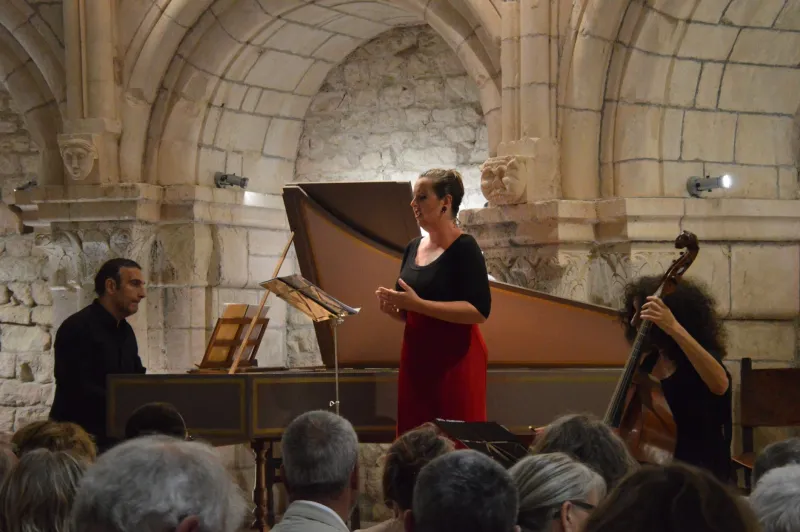
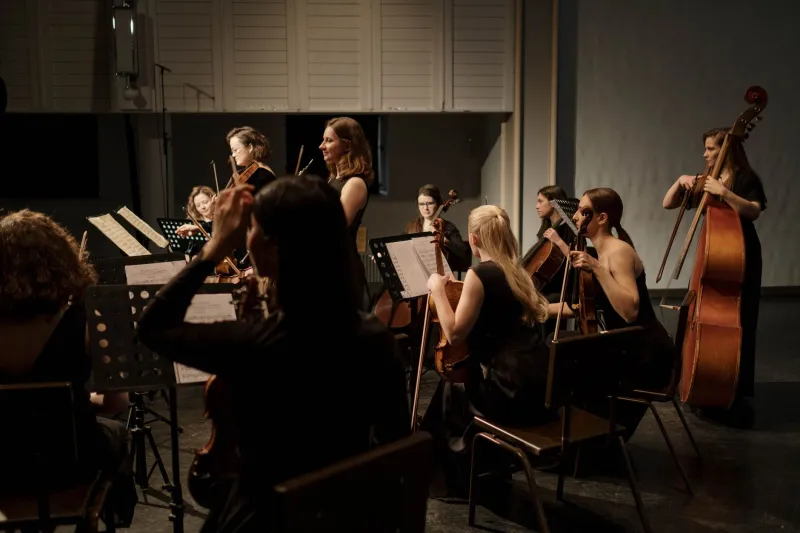
Crossing the Divide: How Classical Virtuosos Are Forging Unlikely Alliances to Reclaim the Spotlight
There is a persistent mythology surrounding the classical musician's life arc — the prodigy years, the conservatory, the ascent through prestigious concert halls, and, eventually, a graceful fade into teaching positions and farewell tours. For a growing number of established performers, however, that narrative has begun to feel less like destiny and more like a constraint waiting to be broken.
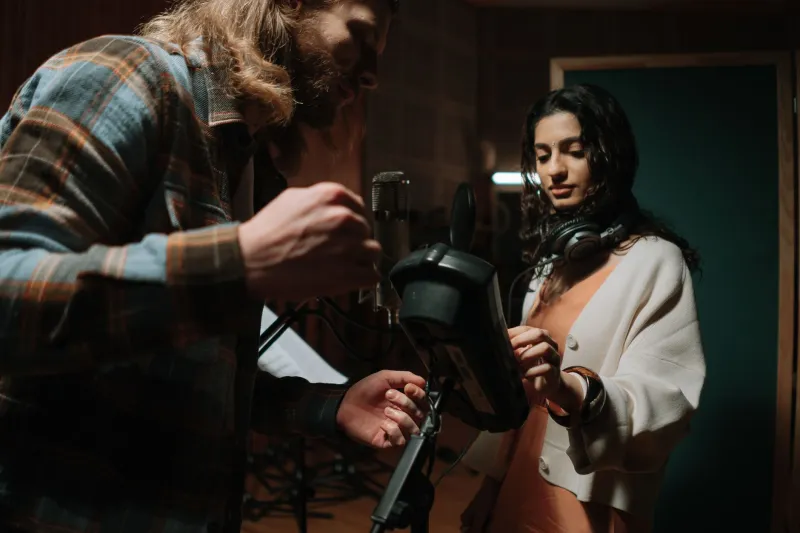
Across the United States, accomplished classical artists are stepping into creative territory that would have once seemed foreign, if not professionally perilous. Cellists are recording alongside indie folk singers in Brooklyn lofts. Pianists trained at Juilliard are co-composing with electronic producers in Los Angeles studios. Violinists whose careers were built on Brahms and Bartók are now appearing on stages shared with spoken-word poets and avant-garde filmmakers. The collaborations are unconventional, sometimes jarring, and — by nearly every account — artistically galvanizing.
The Weight of the Canon
To understand why these partnerships carry such significance, one must first appreciate the particular pressure that classical training imposes. The repertoire is vast, the technical demands unforgiving, and the cultural expectations deeply entrenched. Performers who have spent decades mastering the canon often find themselves in a paradox: celebrated for their fidelity to tradition yet quietly restless within it.
Cellist Nathaniel Tanner — a veteran of the Chicago Symphony Orchestra who spent twenty-two years in the ensemble before pursuing a solo career — describes the feeling with characteristic precision. "You reach a point where you have played the Dvorák Concerto perhaps two hundred times," he has said in interviews. "You love it as much as you ever did. But there is a part of you that wants to know what happens when you play something that has never existed before."
Tanner's answer came in the form of a collaboration with Mara Solís, a New Mexico-based singer-songwriter whose music draws on corrido traditions and ambient electronics. Their joint project, which premiered at the Albuquerque Museum of Art in 2023, attracted an audience that was, by Tanner's own estimation, roughly half composed of people who had never attended a classical concert in their lives.
New Partnerships, New Audiences
The demographic implications of these collaborations are difficult to overstate. Classical music institutions across the country have spent considerable resources attempting to attract younger and more diverse audiences, with mixed results. What appears to be working, somewhat counterintuitively, is not the packaging of classical music in more accessible formats, but rather the genuine creative risk-taking that occurs when classical artists engage with other traditions as equals rather than ambassadors.
Viola player Denise Okafor, formerly principal violist with the Atlanta Symphony Orchestra, partnered in 2022 with experimental hip-hop collective The Meridian Project on a live performance piece that toured venues from the Kennedy Center's Millennium Stage to a converted warehouse in Detroit. The collaboration, she notes, demanded that she unlearn certain instincts that had been refined over decades. "In classical performance, you are always listening backward — to the composer, to the tradition, to your teachers," Okafor explained at a panel discussion hosted by the League of American Orchestras. "Working with The Meridian Project taught me to listen sideways. To the room. To the moment."
The resulting performances drew critical attention not only from classical music press but from outlets covering contemporary music and performance art — a crossover that speaks to the genuine novelty of the work being produced.
The Creative Renewal Factor
Beyond audience development, performers who have undertaken these collaborations consistently describe a deepening of their own artistry. The encounter with unfamiliar creative processes — the looser structures of improvisation, the texture-first approach of electronic composition, the narrative directness of singer-songwriter craft — appears to illuminate aspects of classical technique and sensibility that years of conventional performance had rendered invisible.
Pianist Jerome Whitfield, a graduate of the Cleveland Institute of Music who built his reputation on the Romantic repertoire, spent eighteen months co-writing and recording with indie chamber-pop group The Ashen Quartet. The project required him to approach the piano not as an instrument of interpretation but as a compositional voice in an ongoing conversation. "I found myself rediscovering why I loved certain harmonic progressions in Schubert," Whitfield has noted. "Because I was hearing them from the outside, for the first time in years."
This phenomenon — the way external creative friction can refresh one's relationship to familiar material — is something music educators have long theorized about but rarely seen documented in the careers of working professionals.
Institutional Hesitations and Shifting Norms
Not everyone within the classical establishment has greeted these developments with unqualified enthusiasm. Some conductors and artistic directors express concern that the prestige of classical training risks being diluted when its practitioners migrate toward popular or experimental contexts. There are questions, too, about whether certain collaborations are driven by genuine artistic impulse or by the more pragmatic pressures of a competitive performance market.
Those concerns deserve to be taken seriously. Not every crossover project succeeds on its own terms, and the history of classical music is littered with novelty experiments that aged poorly. The distinction lies, perhaps, in the depth of mutual engagement — whether the classical artist is genuinely transformed by the encounter, or merely lending their credentials to someone else's vision.
The most compelling collaborations emerging from this moment share a quality of authentic reciprocity. Both parties bring something irreplaceable. Both parties leave changed.
A Career Without a Predetermined Curtain
What these stories collectively suggest is that the classical career, long imagined as a single ascending and descending arc, may in fact be better understood as a series of distinct creative lives — each one building on the last, each one capable of producing work of genuine consequence.
For audiences, the invitation is equally significant. To follow a classical musician into unfamiliar territory is to experience the tradition not as a museum exhibit but as a living practice — one that remains capable of surprise, collision, and discovery.
The curtain, it turns out, does not fall on brilliance. It simply rises on a different stage.