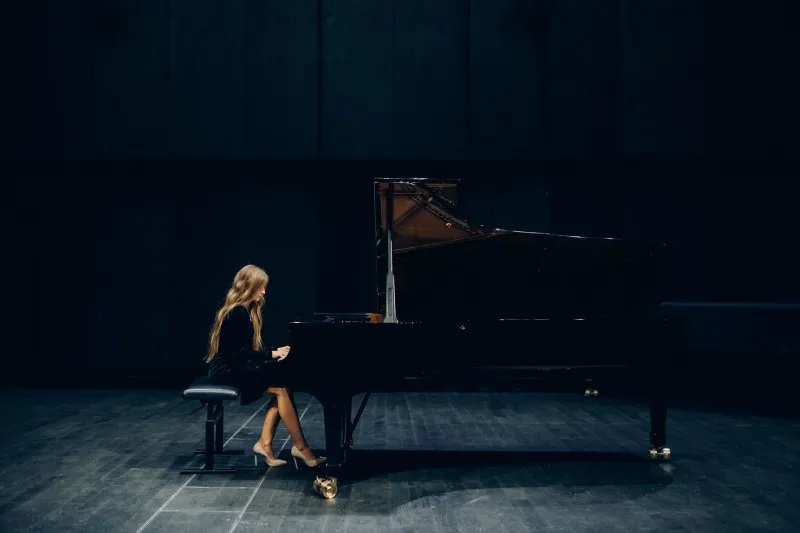
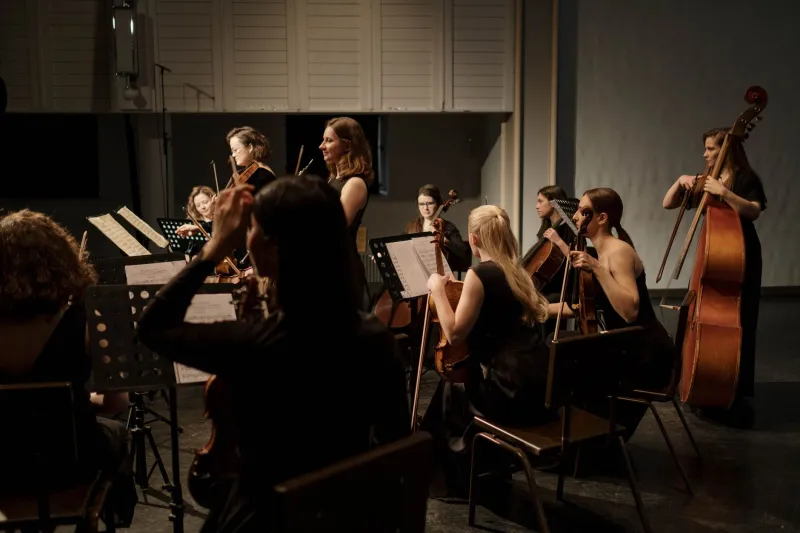
The Closer the Better: America's Classical Music Audiences Embrace the Intimate Stage
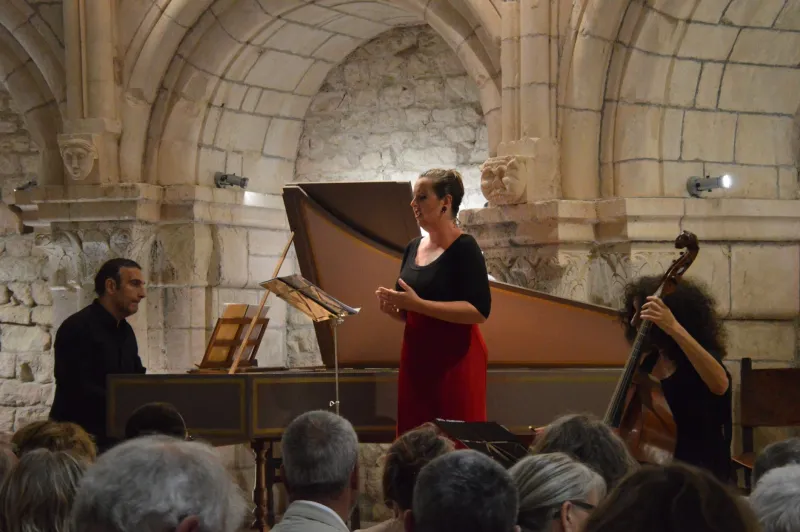
The house lights dim in a converted textile warehouse in Philadelphia's Fishtown neighborhood. Forty-three chairs have been arranged in a loose horseshoe around a single Steinway upright. There is no stage, no proscenium, no program notes printed on heavy stock. The pianist enters from a side door, nods to the room, and begins.
The effect is immediate and difficult to describe to anyone who has not experienced it. The sound does not travel to you — it arrives within you. The breath before a phrase is audible. The slight shift of weight on the bench becomes part of the performance. When the piece ends, the silence that follows feels collectively held, as though the audience has agreed, without speaking, to preserve it for a few seconds longer.
This is not an anomaly. Across the United States, from the Pacific Northwest to the Gulf Coast, classical music is finding some of its most vital expression in spaces that seat fewer people than a Midtown restaurant on a Friday evening.
The Architecture of Attention
The large concert hall is, in many respects, an architectural argument — a statement about the grandeur and social significance of classical music. The tiered seating, the gilded ornamentation, the formal separation of performer and audience: these are not merely aesthetic choices but philosophical ones. They communicate that what is occurring on the stage belongs to a rarefied order of human activity, deserving of reverence and distance.
For a century and more, that argument was largely accepted. Today, it is being quietly but persistently contested.
Venue operators who have pioneered the intimate classical format describe a consistent observation: audiences who attend chamber-scale performances in unconventional spaces report a qualitatively different experience than those who attend the same repertoire in traditional halls — even when the performers are identical.
"There is a moment of recognition that happens in a small room," says Caroline Metzger, who founded the Hearthside Series in Minneapolis, a monthly classical concert program hosted in renovated residential spaces and small galleries. "The audience sees the musician as a human being who has devoted their life to something extraordinary. In a large hall, that humanity gets absorbed by the architecture. Here, it is the only thing in the room."
From Living Rooms to Listening Rooms
The concept of domestic classical performance is, historically speaking, anything but radical. The salon tradition of nineteenth-century Europe — in which composers and performers presented new work in private homes to invited guests — was the incubator for some of the most significant music of the era. Schubert's Schubertiads, Chopin's Paris salons, the chamber evenings hosted by Clara Schumann: these were not secondary venues but primary ones, spaces where the music was heard first and most intimately.
What is new is the deliberate revival and democratization of that model in an American context, shaped by both cultural appetite and practical economics.
The Parlor Concert Project, which operates across six cities including Austin, Nashville, and Portland, Oregon, places professional classical performers in private homes, with hosts curating their own guest lists and the organization handling artist booking and sound logistics. Since its expansion in 2021, the project has facilitated more than three hundred individual concerts, with a waiting list for host applications that stretches several months in most markets.
"People are hungry for something that feels real," says the project's artistic director, Marcus Ellenbogen. "Not produced. Not packaged. They want to be in the room where it actually happens."
The Performer's Perspective
For the musicians themselves, the shift to intimate venues carries its own set of revelations and demands. The technical adjustments are real: dynamics calibrated for a Geffen Hall or a Symphony Center must be entirely reconsidered when the farthest listener is twelve feet away. The interpretive choices that read as subtle in a large hall become nakedly apparent in a small one.
But the rewards, performers consistently report, are commensurate with the exposure.
Soprano Lydia Beaumont, whose career has taken her to the Metropolitan Opera and the Chicago Lyric, began offering intimate recitals through the Salon Series at Washington, D.C.'s Dupont Circle Arts Collective in 2022. She describes the experience as both humbling and liberating. "In a large house, you are projecting toward the back of the hall," she explains. "In a small room, you are speaking to each person individually. It changes everything about phrasing, about breath, about why you are singing at all."
That directness extends to the post-performance dynamic as well. At intimate venues, the boundary between concert and conversation dissolves naturally. Audiences linger. Questions are asked. The performer becomes accessible in a way that the formal concert hall structure rarely permits.
Accessibility and the New Classical Audience
The intimacy movement is also, not incidentally, an accessibility movement. Ticket prices for micro-venue classical events tend to be substantially lower than those for major institutional concerts — a reflection of reduced overhead rather than reduced quality. Many series operate on suggested-donation models or sliding-scale pricing, removing financial barriers that have historically limited classical music's reach.
The physical accessibility of these spaces is equally significant. A neighborhood gallery or a community arts center is not the forbidding cultural institution that a symphony hall can appear to be for first-time classical attendees. The informality of the setting sends a signal — intentional or not — that the music is for everyone who wishes to receive it.
Data from organizations tracking classical audience demographics suggests that intimate venue series are consistently outperforming large institutions in attracting attendees under forty and listeners from communities historically underrepresented in classical concert halls. The correlation is not accidental.
A New Hierarchy of Listening
None of this is to suggest that the great concert halls of America have outlived their purpose. The experience of hearing a full orchestra perform Mahler's Ninth in a room designed specifically for that sound remains one of the singular pleasures available to any music lover. Scale has its own magnificence.
But the intimate venue movement is proposing something distinct: that classical music's future may depend less on the grandeur of its presentation than on the depth of the connection it fosters. That proximity is not a compromise but a different kind of excellence. That the most powerful thing a performance can do is make an audience member feel, for the duration of the music, that it was made precisely for them.
In a converted loft in Philadelphia, a pianist lifts his hands from the keys. The silence holds. Then, softly, the room exhales together.