The Eloquent Void: How the Art of Stillness Is Transforming the Classical Concert Hall
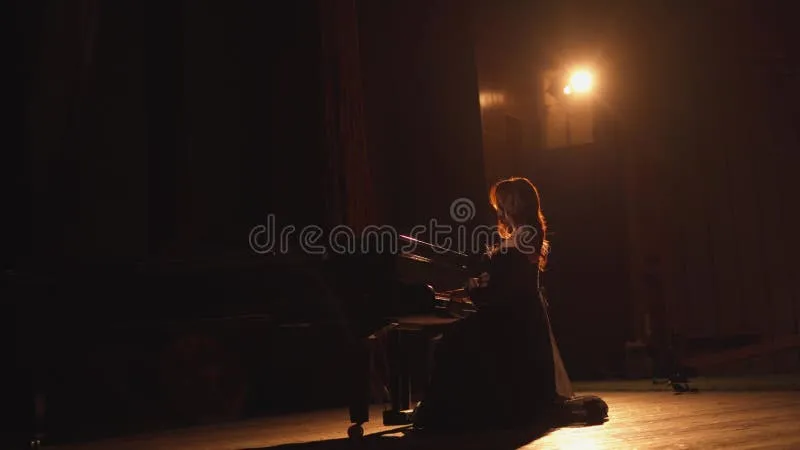
There is a particular kind of held breath that falls over a concert hall when a performer pauses — not from uncertainty, not from error, but from absolute intention. The bow lifts from the string. The conductor's baton hangs suspended. The pianist's hands hover above the keys like two birds reluctant to land. In that suspended moment, something extraordinary occurs: the audience, collectively, feels more.
Across the United States, a growing number of classical performers and conductors are not merely tolerating silence — they are composing with it. They are treating the pauses between phrases, between movements, and between entire works as structural elements deserving the same careful attention one might give to a difficult cadenza or a delicate pianissimo passage. The result is a concert experience that feels, to many audience members, fundamentally different from what they have known — more visceral, more intimate, and, at times, almost unbearably moving.
What Neuroscience Reveals About Musical Stillness
The scientific community has begun to illuminate what musicians have long intuited. Researchers at institutions including Stanford University and the University of California, Davis have examined how the human brain processes the cessation of sound within a musical context. Their findings suggest that silence in music is far from passive. When a listener's brain anticipates a continuation of sound and that continuation is withheld, a cascade of neurological activity follows — heightened attention, elevated emotional processing, and a measurable spike in what researchers describe as anticipatory arousal.
A landmark study published in Nature Neuroscience found that brief silences in music triggered greater emotional responses than the notes surrounding them, suggesting that the brain fills the void with its own interpretive energy. In essence, silence invites the listener to become a co-creator of the emotional experience. The music pauses; the imagination does not.
This phenomenon is particularly pronounced in live performance settings, where the communal nature of the audience amplifies individual response. When thousands of listeners simultaneously hold their breath, the silence itself acquires a kind of acoustic weight — a presence as palpable as any fortissimo chord.
The Conductors Rewriting the Rules of Pacing
Among those most deliberately exploring this territory is a cohort of conductors who have grown increasingly skeptical of what might be called the efficiency model of classical performance — the notion that momentum, forward drive, and rhythmic precision are the supreme virtues of orchestral interpretation.
Yannick Nézet-Séguin, the celebrated music director of the Metropolitan Opera and the Philadelphia Orchestra, has spoken openly about his belief that the most transformative moments in a performance often occur in stillness. In interviews, he has described silence as "the place where music breathes" — a phrase that captures both the organic necessity and the artistic ambition behind his approach to pacing. Under his baton, the Philadelphia Orchestra's recent traversal of Mahler's Ninth Symphony drew widespread critical attention for the extraordinary lengths of its silences, particularly in the final Adagio, where the music's dissolution into quiet became an almost meditative experience.
Similarly, conductor Mirga Gražinytė-Tyla, whose American appearances have generated considerable excitement in recent seasons, has developed a reputation for interpretive choices that privilege emotional depth over surface momentum. Her approach to Sibelius and late Beethoven, in particular, has been noted for the way she allows phrases to settle into silence before proceeding — a practice that asks audiences to resist the cultural impulse toward constant stimulation and instead to inhabit the present moment fully.
Soloists and the Architecture of the Pause
The phenomenon extends well beyond the orchestral podium. Among soloists, a renewed interest in expressive silence has reshaped recital culture in ways that are both subtle and significant.
Pianist Igor Levit, a figure whose American recitals have consistently provoked both admiration and conversation, has become something of a philosopher of musical stillness. His interpretations of late Schubert and the Beethoven sonatas are distinguished by pauses of unusual duration — moments that some listeners initially experience as unsettling before recognizing them as profoundly intentional. Levit has described these silences as "the music listening to itself," a formulation that suggests a kind of reflexive awareness built into the performance.
Cellist Yo-Yo Ma, whose career has long been defined by an exceptional sensitivity to the emotional architecture of a phrase, has spoken in interviews about the influence of Zen Buddhist concepts of ma — the Japanese notion of meaningful negative space — on his approach to musical timing. For Ma, silence is not an interruption of music but an extension of it, carrying the emotional content of what has just been heard into the consciousness of the listener.
The Audience as Active Participant
What makes this artistic movement particularly compelling from a cultural standpoint is the shift it demands of American audiences — a shift that runs counter to many of the prevailing habits of contemporary life. In an era defined by perpetual connectivity, instant gratification, and the relentless compression of attention spans, sitting with silence requires a kind of discipline that is itself becoming a form of cultural resistance.
Concert programmers at venues such as Carnegie Hall, the Kennedy Center, and the Chicago Symphony Orchestra's Symphony Center have noted a discernible change in how audiences respond to performances that embrace extended stillness. Post-concert surveys and audience feedback increasingly reflect a hunger for exactly this quality — a desire for experiences that slow time rather than accelerate it, that create space for feeling rather than filling every moment with sensation.
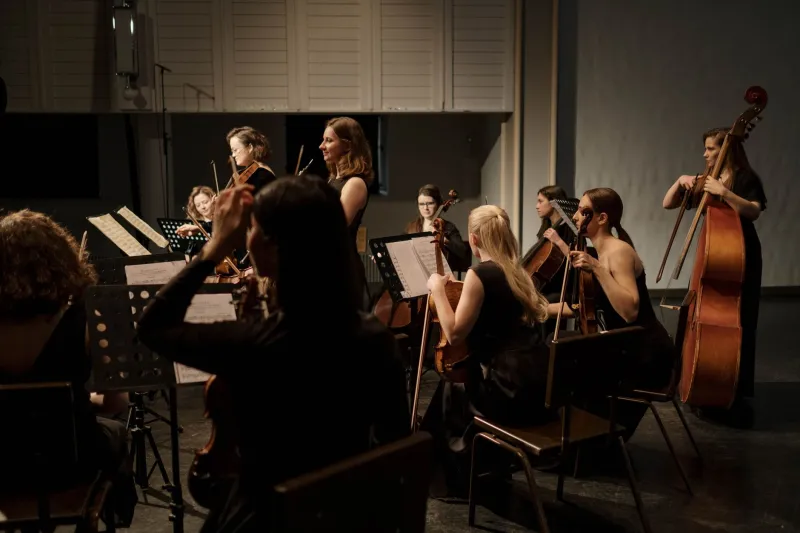
Some organizations have responded by programming what might be described as silence-forward concerts: recitals and chamber performances in which the pacing is deliberately expansive, the repertoire chosen for its contemplative qualities, and the physical environment — lighting, acoustics, even seating arrangements — calibrated to deepen the audience's capacity for stillness.
A New Vocabulary for an Ancient Art
There is something quietly radical about this development. Classical music has always possessed a sophisticated relationship with silence — from the rests that punctuate a Bach fugue to the vast, terrifying quiet that precedes the final chord of a Bruckner symphony. But the current generation of performers appears to be elevating that relationship into something more conscious, more deliberate, and more central to their artistic identity.
In doing so, they are not departing from the tradition so much as excavating it — returning to something essential that the pressures of the recording industry, the demands of busy concert schedules, and the anxieties of modern performance culture had gradually buried. They are reminding audiences, and perhaps themselves, that music is not merely sound organized in time, but the full spectrum of acoustic experience — including, crucially, its own cessation.
The curtain rises on brilliance, as this publication has long maintained. But sometimes, brilliance does not announce itself with a flourish. Sometimes it arrives in the hush that follows the final phrase, in the suspended moment before applause breaks the spell, in the eloquent void where music ends and meaning begins.