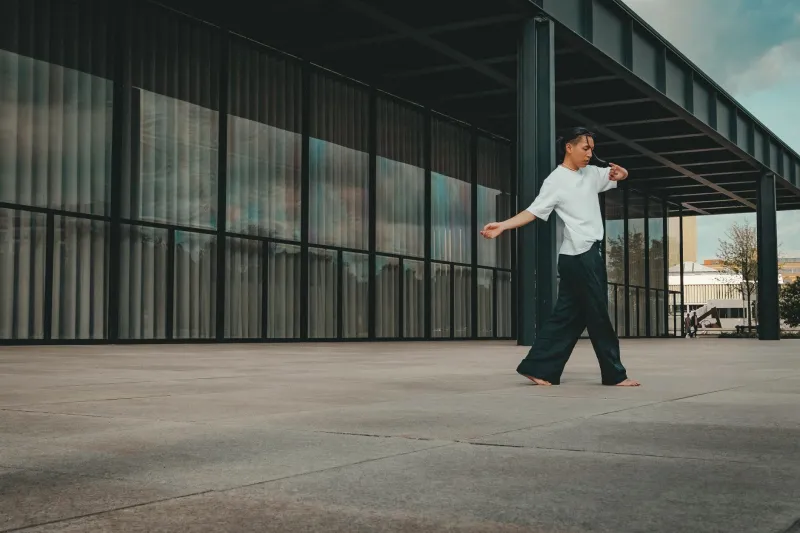
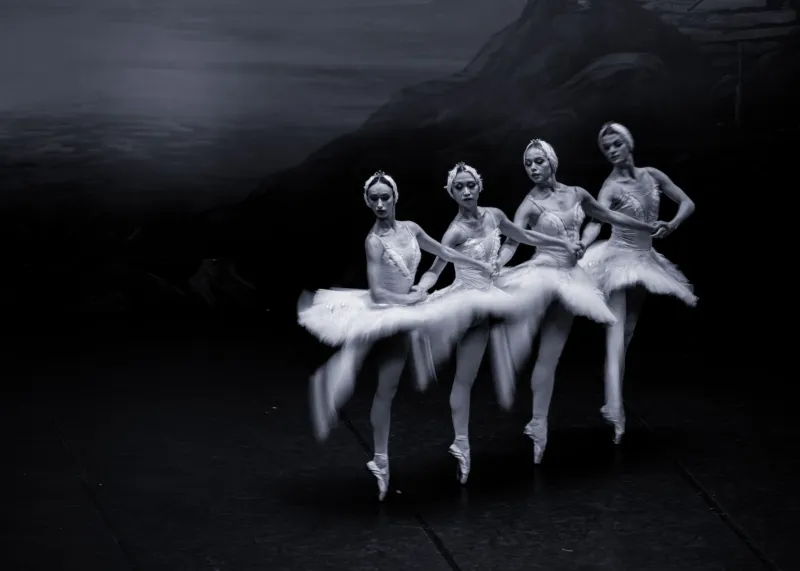
The Wings of Greatness: When Stand-In Performers Step Into the Light and Rewrite the Moment
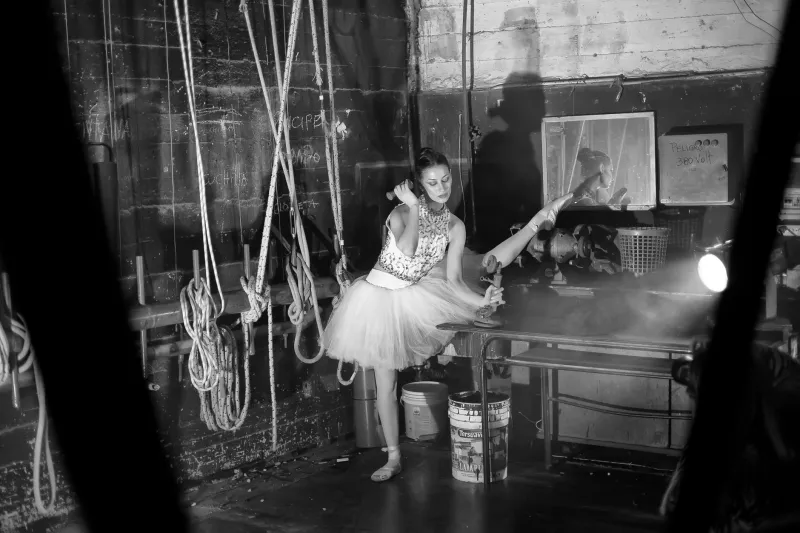
The phone call arrives without ceremony. A principal dancer has injured an ankle in afternoon rehearsal. A guest soloist has been felled by illness hours before curtain. The theater fills, the audience settles, the programs are already printed — and somewhere backstage, a performer who was not scheduled to perform tonight is now pulling on pointe shoes or rosining a bow with hands that may or may not be trembling.
What happens next is one of classical performance's most quietly dramatic stories, and one of its least told.
The Architecture of Readiness
To understand the understudy's moment, one must first understand the understudy's life. In America's major ballet companies — the New York City Ballet, the American Ballet Theatre, the San Francisco Ballet, and their counterparts in Boston, Houston, and Chicago — the corps de ballet is populated with dancers who have spent years preparing roles they may never perform in front of an audience. They attend every rehearsal, absorb every note from artistic directors, memorize every nuance of the principal's interpretation, and then return to the studio the following morning to do it again.
This is not a lesser form of artistry. It is, in many respects, a more demanding one. The understudy must hold the role in a state of perpetual readiness without the energizing feedback of actual performance. They must remain technically sharp without the adrenaline of a live audience to sharpen them. They must know the choreography not as something they do, but as something they are prepared to do — a distinction that requires a particular quality of focused, patient attention.
The same is true in orchestral settings, where assistant conductors and section musicians regularly prepare programs they may or may not be called upon to lead or feature in. The preparation is complete; the performance remains contingent.
When Contingency Becomes Reality
The history of classical performance is littered with moments when that contingency resolved into something extraordinary. Leonard Bernstein's legendary 1943 debut with the New York Philharmonic — when he stepped in for an ailing Bruno Walter with only hours' notice and conducted a nationally broadcast performance without a score — is the archetype of the genre. But it is far from the only example, and the more recent instances, less celebrated but no less revelatory, tell an equally compelling story.
In the ballet world, these moments often carry an additional layer of complexity. A dancer stepping into a principal role must contend not only with technical demands but with the physical reality of performing opposite partners who have rehearsed extensively with someone else. The lifts, the partnering, the spatial relationships — all of these must be recalibrated in real time, often with minimal opportunity for prior rehearsal together. The physical trust that principal partnerships develop over months of work must be approximated in hours, or sometimes minutes.
And yet — and this is the part that continues to astonish those who witness it — it frequently works. More than works: it sometimes produces performances of unusual vitality and interpretive freshness that linger in the memories of audiences and critics long after more polished, expected evenings have faded.
The Interpretive Freedom of the Unexpected
Why should this be? Part of the answer lies in what might be called the interpretive freedom of the unexpected. A principal artist who has performed a role dozens of times operates within a well-established personal interpretation — one that is refined, assured, and perhaps, in some small measure, automatic. The substitute performer, arriving at the role without that accumulated habit, is forced to make every choice consciously and in the moment.
This enforced immediacy can produce something that resembles, in its best manifestations, the quality that all performing artists seek and rarely achieve: genuine presence. The stand-in performer cannot rely on muscle memory to carry them through difficult passages. They must attend, fully and continuously, to what is happening on stage. And that quality of complete attention is often perceptible to audiences, even when they cannot name what they are responding to.
There is also the matter of interpretive freshness. A substitute dancer or musician, coming to a role without the weight of a personal interpretive tradition, may make choices that the principal would never consider — not because those choices are better or worse, but because they are different. And difference, in classical performance, is its own form of revelation. Audiences who have seen a ballet performed many times may find, in a substitute's reading, something they had not previously noticed in the choreography or the score.
The Human Dimension
Beyond the artistic questions, there is a human story in every understudy's moment that deserves recognition. These are performers who have committed themselves to a discipline of extraordinary rigor, who have made the sacrifices that classical training demands, and who have done so without the assurance of a principal position or a featured role. Their readiness is an act of faith — faith in their own ability, faith in the institution they serve, faith that the moment will eventually arrive.
When it does arrive, often without warning and always without adequate preparation time, what they draw upon is not merely technical skill but something harder to quantify: the accumulated experience of watching, of listening, of being present in rehearsal rooms and in the wings, absorbing everything. The substitute performer's secret resource is attention — the habit of paying close attention to the work even when, especially when, they are not the one performing it.
America's classical institutions would do well to honor this more explicitly. The depth of talent that exists in the corps de ballet, in the back desks of the orchestra, in the assistant conductors' offices, is a form of institutional wealth that rarely receives the recognition it deserves. It is, in every meaningful sense, what makes the moment possible when the moment comes.
A Different Kind of Stardom
The understudy who seizes their moment rarely becomes a conventional star as a result. The classical world's hierarchies are resilient, and a single brilliant performance, however memorable, does not automatically translate into a principal appointment or a featured billing. But something else happens, something perhaps more durable: a reputation for reliability, for depth, for the kind of artistry that holds up under pressure.
In a field where the curtain rises regardless of circumstance, that reputation is worth more than it might initially appear. The performer who has proven they can deliver when everything is against them carries a different kind of authority — quieter than stardom, but no less real. It is the authority of someone who has been tested and found not merely adequate, but genuinely, unexpectedly, luminous.