Where Traditions Converge: The Hybrid Performance Revolution Reshaping America's Classical Stages

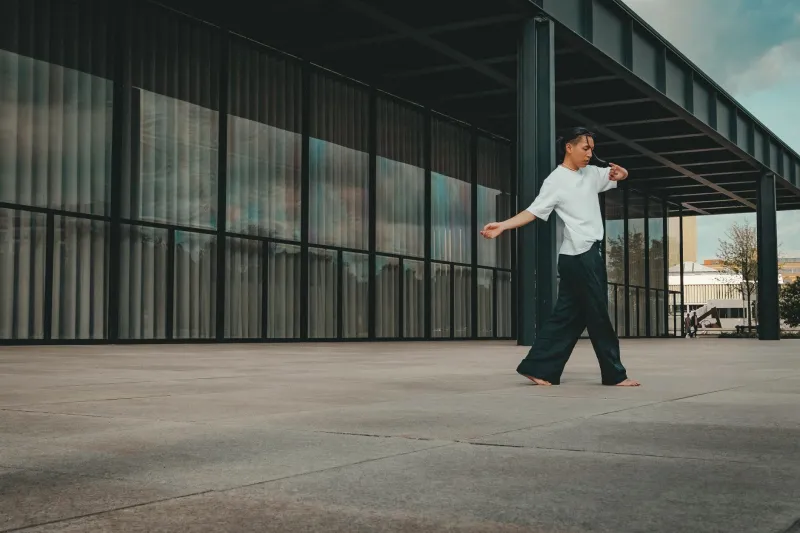
Photo by Photo by Ahmad Odeh on Unsplash on Unsplash
Something unusual is happening in America's classical theaters. The proscenium arch, that venerable boundary between performer and audience, is being redrawn—not demolished, but reimagined—as choreographers, composers, visual artists, and technologists find themselves sharing stages that once admitted only one discipline at a time. Whether this represents the salvation of an art form or its reinvention beyond recognition depends entirely on whom you ask.
A Stage in Transition
The pressure on classical performing arts institutions in the United States has rarely been more acute. Subscription models that sustained regional theaters and orchestras for decades are collapsing under the weight of changing consumer behavior. Younger Americans, accustomed to the infinite customization of streaming culture, are demonstrating limited appetite for the fixed, sequential programming that has defined the classical season. Meanwhile, the cost structures of maintaining large ensembles and historic venues continue to rise.
Into this environment of institutional anxiety has arrived a wave of cross-disciplinary experimentation that is, at its best, producing genuinely extraordinary art—and, at its most cynical, producing spectacle dressed in the borrowed credibility of classical tradition. Distinguishing between these outcomes requires attention, and the distinction matters enormously for the future of the field.
The Laboratories of Innovation
The most sophisticated examples of hybrid performance currently operating in the United States are not accidents of desperation but the products of deliberate artistic vision. The Brooklyn Academy of Music has long served as a proving ground for work that defies categorical assignment, presenting productions that integrate live orchestral performance with contemporary dance, projected visual art, and architectural sound design in ways that feel neither compromised nor confused but genuinely unified.
In Chicago, the Lyric Opera has experimented with productions that incorporate live visual art creation during performance—painters and installation artists working in real time alongside singers, their canvases becoming part of the scenic vocabulary of the evening. Audiences who might never have purchased a ticket to a traditional opera production have attended these events with conspicuous enthusiasm, and a measurable percentage have subsequently purchased tickets to more conventional programming.
The Alvin Ailey American Dance Theater, rooted in modern dance but deeply conversant with classical traditions, has collaborated with chamber ensembles and electronic composers to create works that occupy a genuinely new aesthetic territory—neither classical nor contemporary but something that draws meaningfully from both. These productions have consistently sold out in cities across the country, suggesting that the appetite for serious, ambitious cross-disciplinary work is substantial.
The Technology Question
No examination of hybrid performance can avoid the role of emerging technology, which has become both the most exciting and most contested element of the genre-blending movement. Projection mapping, spatial audio, augmented reality, and AI-generated visual content have all found their way onto classical stages in recent seasons, with results that range from genuinely transformative to distractingly gimmicky.
The Los Angeles Philharmonic, under the leadership of its visionary music directors, has been among the most aggressive American orchestras in integrating immersive visual technology into concert presentations. Its staging of Beethoven's Ninth in a fully immersive visual environment generated both rapturous reviews and sharp criticism from traditionalists who argued that the visual spectacle competed with rather than enhanced the music.
This tension is not easily resolved. Technology, when deployed with genuine artistic intentionality, can create an experiential context that deepens the audience's engagement with music or movement. When deployed primarily as audience-acquisition strategy, it tends to produce a kind of cultural novelty that attracts first-time attendees but fails to build the habitual relationship with the art form that sustains institutions over time. The difference lies in whether the technology serves the artistic vision or substitutes for one.
The Purist's Objection
The resistance to cross-disciplinary fusion from within classical institutions is neither uniformly reactionary nor without legitimate artistic basis. The argument that certain classical works are complete in themselves—that a Brahms symphony requires no visual augmentation, that a Balanchine ballet is diminished rather than enhanced by multimedia overlay—deserves serious engagement rather than dismissal.
There is a meaningful distinction between hybrid performance as a creative form in its own right and hybrid performance as a presentation strategy applied to existing repertoire. The former represents genuine artistic exploration; the latter risks treating masterworks as raw material for audience-development exercises. The most thoughtful practitioners of cross-disciplinary work are careful to honor this distinction, creating new pieces conceived from the outset as integrated experiences rather than retrofitting classical works with contemporary flourishes.
"The question we always ask," notes one artistic director at a mid-sized American dance theater, "is whether the collaboration produces something that neither discipline could achieve alone. If the answer is no, we're not doing fusion—we're doing decoration."
Indie Crossovers and Unlikely Alliances
Perhaps the most culturally significant dimension of the hybrid performance movement is the increasing frequency of collaboration between classical institutions and artists from the indie music, experimental theater, and contemporary visual art worlds. These partnerships, once considered incompatible with the brand identity of classical venues, are producing some of the most discussed work currently on American stages.
When the Cincinnati Symphony Orchestra commissioned arrangements from indie composers and presented them alongside Ravel and Debussy in a program explicitly designed to draw parallels between twentieth-century impressionism and contemporary sonic experimentation, the resulting evening attracted an audience demographic that the orchestra's own marketing team described as unprecedented. The risk—that core subscribers would feel alienated—proved largely unfounded; most reported finding the juxtaposition illuminating rather than jarring.
These cross-pollinations are valuable not merely as audience-development tools but as artistic acts. They remind performers trained in classical traditions that those traditions were themselves once radical, once disruptive, once the avant-garde. The fusion of the present is the classicism of the future.
Sustainability or Dilution?
The central question posed by the hybrid performance movement—whether it represents a sustainable path forward for classical institutions or a dilution of what makes those institutions culturally irreplaceable—may be, ultimately, a false binary. Institutions that have pursued cross-disciplinary work with genuine artistic seriousness have generally found that it strengthens rather than compromises their classical identity, attracting new audiences without alienating established ones.
The risk lies not in fusion itself but in fusion without conviction—in the deployment of novelty as a substitute for artistic vision. Classical music and dance have survived centuries of cultural upheaval not by remaining static but by remaining serious: by insisting, in every era, that the art form is worth the full investment of human attention and creative intelligence.
The hybrid stage, at its finest, makes exactly that insistence—in new languages, to new ears, with the same uncompromising ambition that has always been the classical tradition's greatest gift.